SodaSlim Official Website › Guides
GuidesMetabolism supplement guides from this desk
Two long guides sit beside the product pages on this website, and neither is about SodaSlim.
One explains what the metabolism supplement category actually contains and what its evidence looks like. The other is a checklist for reading any label in the category, applied at the end to the product this desk sells, score and all.
Written to be useful whether or not you buy anything here.
The two guides
What is in a metabolism supplement, and what the evidence says
The ingredient families that recur across the category, what each one has actually been shown to do, and the daily amounts the trials used. Roughly two thousand words.
How to choose a metabolism supplement
An eight-point checklist for reading a label before buying it, then the same checklist run against SodaSlim without softening the result.
A retail desk writing a category guide
A retail desk writing a category guide is in an obvious conflict, and the honest response is to write the guide so that it would still be useful to somebody who buys a competitor's product.
That is the test applied to both of these. The checklist has eight points and the product this desk sells does not pass all of them. Publishing the score anyway is what makes the other seven worth reading.
The alternative, a guide whose conclusion is the product at the top of the page, is common in this category and is worth nothing to anybody.
Who each guide is for
The category guide, if you are new to this
It explains what the five ingredient families are, what each has actually been shown to do, and at what daily amount. Read it once and most labels in this category become legible, including the ones sold by people who are not us.
The checklist, if you are choosing between two bottles
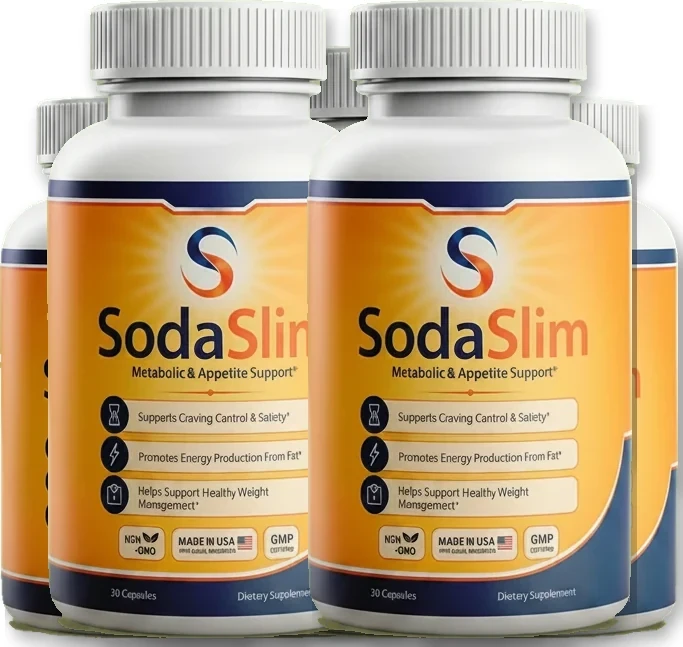
Eight questions and a scored example. It is the faster of the two and the one to open with a product page in another tab. The scored example is the capsule sold on this website, and it does not pass all eight.
Between them they answer a question the product pages on this site cannot, because the product pages are about one capsule. A reader who wants to know whether this category is worth buying into at all is better served by the two guides, and worse served by every page here that has a price on it.
Both are written so they would still be useful to somebody who closes this tab and buys a competitor's bottle. That is the test this desk applies to them, and it is the only reason a retail desk writing a category guide is worth anybody's time.
What these two guides deliberately do not do
Neither guide recommends a product, including the one sold on this website. That is not modesty; it is what makes them usable. A category guide whose conclusion is the page it sits on has told you nothing you could not have guessed from the URL.
Neither one ranks brands either. Ranking requires either a laboratory or an assumption, and this desk has neither. What the checklist does instead is give you the eight questions, so the ranking is yours and you can run it against a label this desk has never seen.
And neither guide promises an outcome. The honest summary of this whole category is that the effects found in it, where they are found at all, are small and sit on top of food, sleep and activity rather than replacing any of them. Both guides say so in the same words, because it is the same fact.
The category in one screen, if you read nothing else
- The stimulant is doing most of the visible work. Whatever you notice in week one is caffeine, and caffeine is the one ingredient in this category with a firm evidence base and a published daily ceiling.
- The botanicals are measured in weeks. Green tea and green coffee trials run twelve weeks or longer, so any product judged at day ten has not been judged at all.
- The doses in the research are large. Chlorogenic acid at 500 mg a day, EGCG around 300 mg, hydroxycitric acid at 1,500 mg. A once-daily capsule has limited room, and that arithmetic decides more than the ingredient list does.
- One name on the label is usually there for the photograph. Cheap, safe, recognisable and thinly evidenced. Its presence is a signal about the marketing rather than about the formula.
- A missing Supplement Facts panel removes the only axis of comparison. It does not prove a light formula; it removes the evidence that would distinguish a serious one.
- Two families carry a liver-injury literature. Green tea extract and garcinia. The events are rare, and naming what you take at any appointment is the whole of the precaution.
Everything in that list is drawn out at length in the category guide, with the source for each line. If you are standing in a shop with a bottle in your hand, the list above is the version that fits on a phone screen.
Reading a supplement label in ninety seconds
Four passes, in this order, and stop as soon as one of them answers the question for you.
Both guides are long. This is the version for somebody standing in a shop, and it works on any label in any category rather than only on this one.
The four passes
Turn it over and find the panel
If there is no Supplement Facts panel, the label has already told you the most important thing about itself, and the rest of this is guesswork. If there is one, read the amount column before the name column.
Look for a proprietary blend
A single total covering several names, listed in descending weight. The total is real; the split is not disclosed. A blend with a small total across many names cannot be a researched dose of anything.
Check the serving size against the count
Thirty capsules at two a day is fifteen days, not a month, and a per-bottle price means nothing until that arithmetic is done. It is the single most common way a price comparison goes wrong.
Read the other-ingredients line
The shell, the fillers and the flow agents. It is where a vegetarian claim is settled, and it is the line most artwork leaves off.
Where these guides stop being general about SodaSlim
Both guides are written about the category, and the category is wide enough that a reader can apply either one to a bottle this desk does not sell. That is intended. The checklists work on any metabolism capsule with a label and an ingredient list.
There are two points at which they stop being neutral, and it is fairer to name them than to let them sit unmarked. The first is the claims ceiling: both guides treat the printed label as the limit of what a product may be said to do, which is a stricter standard than most sellers in this category work to, including the one behind the bottle on this site. The second is the panel question, where the guides treat a missing Supplement Facts table as a real deduction rather than a formatting choice.
Applied honestly, both of those count against SodaSlim as well. The capsule prints no panel, and the seller’s own page runs past the label. A guide that could not reach that conclusion about the product beside it would not be worth reading.
Who publishes this SodaSlim website?
The five sources that sit underneath both guides.
- Batsis JA, Apolzan JW, Bagley PJ, et al. A systematic review of dietary supplements and alternative therapies for weight loss. Obesity (Silver Spring). 2021;29(7):1102-1113. PMID 34159755. https://pubmed.ncbi.nlm.nih.gov/34159755/
- Jurgens TM, Whelan AM, Killian L, et al. Green tea for weight loss and weight maintenance in overweight or obese adults. Cochrane Database Syst Rev. 2012;12(12):CD008650. Randomised trials of at least twelve weeks. PMID 23235664. https://pubmed.ncbi.nlm.nih.gov/23235664/
- Kanchanasurakit S, Saokaew S, Phisalprapa P, et al. Chlorogenic acid in green bean coffee on body weight: a systematic review and meta-analysis of randomized controlled trials. Syst Rev. 2023;12(1):163. Effect found at chlorogenic acid 500 mg a day. PMID 37710316. https://pubmed.ncbi.nlm.nih.gov/37710316/
- Heymsfield SB, Allison DB, Vasselli JR, et al. Garcinia cambogia (hydroxycitric acid) as a potential antiobesity agent: a randomized controlled trial. JAMA. 1998;280(18):1596-600. Twelve weeks at hydroxycitric acid 1,500 mg a day; no difference from placebo in body weight or fat mass. PMID 9820262. https://pubmed.ncbi.nlm.nih.gov/9820262/
- Nawrot P, Jordan S, Eastwood J, et al. Effects of caffeine on human health. Food Addit Contam. 2003;20(1):1-30. Concluded that up to 400 mg a day is not associated with adverse effects in healthy adults, and 300 mg a day for women of reproductive age. PMID 12519715. https://pubmed.ncbi.nlm.nih.gov/12519715/