Choosing a Gut Health Supplement Probiotic by Strain, Not by Marketing Claims
Quick Answer: How Do You Choose a Probiotic by Strain?
Look for a three-part name on the label: genus, species, and a strain designation, which is usually a short code of letters and numbers. Any published research in this field applies to a specific strain, not to a species and certainly not to the word "probiotic", so a label that stops at "Lactobacillus blend" has told you nothing you can check. A big colony-forming unit number on the front is not a substitute for that name.
- Three-part naming: genus, species and strain code. Two out of three is not enough to look anything up.
- Count at expiry, not at manufacture: live organisms decline on the shelf, so the guaranteed date is the number that matters.
- Storage instructions: a live product with no storage guidance on the pack is a warning sign in itself.
Genus, species, strain: reading the three-part name
Probiotic naming follows the same convention as the rest of microbiology. The first word is the genus, the second is the species, and the third element — usually an alphanumeric code, sometimes a registered trade name — identifies the specific strain that was isolated, deposited in a culture collection and studied. The international consensus definition of the word "probiotic" makes strain-level characterisation part of the definition, not an optional nicety, precisely because that is the level at which the science operates.
The practical consequence is that findings do not transfer. Two strains sharing a species name can differ meaningfully in what they do, how well they survive the journey through the stomach, and whether they colonise at all. A manufacturer citing research on one strain while shipping a different member of the same species is not lying about the species — it is simply relying on the reader assuming that species is the meaningful unit. It is not. When a label gives you a full three-part name, you can search that exact string and see what has actually been published. When it gives you "proprietary probiotic complex", you cannot, and that is usually the point.
Why a large CFU number on its own tells you very little
Colony-forming units measure how many viable organisms a serving contains. They do not measure whether those organisms are the right ones for anything, whether they survive stomach acid, or whether they do anything once they arrive. A product advertising an enormous count of unnamed cultures is answering a question nobody sensible asked. Meanwhile, the studied amount for a well-characterised strain is a property of that strain's research, not a target to be beaten — more is not automatically better, and in some cases the studied dose is lower than what the biggest numbers on the shelf advertise.
Read the number in context, then. First establish what the strains are, then ask whether the count per serving is in the region used in the research on those strains. That ordering keeps you from being impressed by a figure that describes nothing in particular. It also explains why two honest products can carry very different counts without either being wrong.
| What the label says | What you can verify | Buyer signal |
|---|---|---|
| "Proprietary probiotic blend, 10 billion CFU" | Nothing. No organism is identified and no amount is attributable. | Weakest — nothing here is checkable |
| Genus only, e.g. "Lactobacillus, 10 billion CFU" | The broad group, which spans strains with very different behaviour. | Weak |
| Genus and species, no strain code | The species, but not the strain the published work actually used. | Partial — still not searchable |
| Full three-part name with per-strain counts | Exactly which organisms, in what amount. You can look each one up. | Strong |
| Full name, per-strain counts, guaranteed through expiry | All of the above, plus a commitment that survives the shelf. | Strongest available |
A colony-forming unit count without a strain name is a number without a noun. It tells you how many of something, and never what.

The same standard, applied to a botanical formula
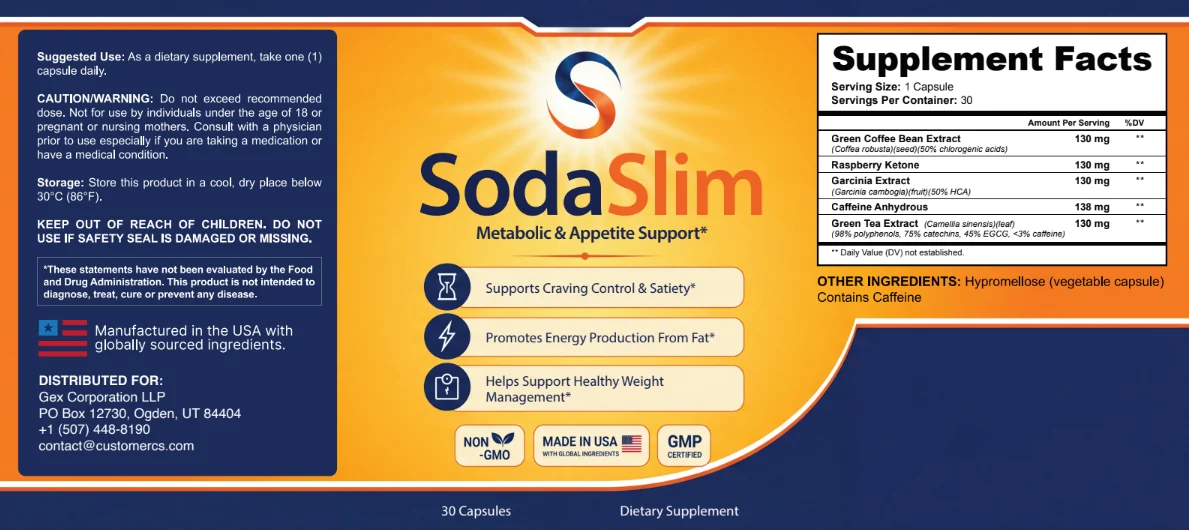
SodaSlim is not a probiotic — it is a once-daily metabolic and appetite capsule. It does, however, meet the disclosure test: every active named, every amount printed on the panel.
See the Official Store OfferCount at manufacture versus count at expiry
This is the single most consequential piece of small print on a probiotic pack. Live organisms are perishable. A count measured "at time of manufacture" is measured at the most favourable possible moment, before shipping, warehousing, a hot delivery van or a summer on a shelf have taken their toll. A count "guaranteed through the best-before date" commits the manufacturer to viability at the point you actually swallow it, which is the only point that matters to you.
Manufacturers know the difference, which is why the phrasing is usually careful. If the pack does not say which basis the number uses, assume the more flattering one. Overage — adding extra organisms at manufacture so the count still holds at expiry — is a legitimate and common practice, but it is invisible to you unless the label states the guaranteed-to-expiry figure. Between two products with the same headline number, the one guaranteeing it to expiry is delivering more.
What a gut health supplement probiotic can and cannot be claimed to do
The regulatory line is worth stating plainly, because it explains why honest labels sound cautious. In the United States a dietary supplement may not claim to diagnose, treat, cure or prevent any disease. Digestive conditions are medical territory, and a probiotic sold as a supplement may not be presented as a treatment for one, however common the condition is. Language such as "supports digestive comfort" or "may help maintain a balanced gut community" is not evasive marketing — it is what the rules permit, and a brand that reaches past it is telling you something about its willingness to overstate.
What the evidence does support is narrower than the category's reputation. Health agencies summarising this field describe strain-specific findings in specific situations, considerable variation between studies, and a general shortage of the large, long, well-controlled trials that would settle matters. Some strains have decent support for particular uses; many marketed products contain neither those strains nor those amounts. Being straight about it: a gut health supplement probiotic is a reasonable thing to try if you choose it on strain and dose, and a poor thing to rely on if you choose it on the front of the pack.

Storage, delivery and the survival question
Organisms have to survive two journeys: the shelf and the stomach. For the shelf, check whether the pack asks for refrigeration and whether it uses moisture-resistant packaging such as blister strips or a sealed bottle with a desiccant. Heat and humidity are the enemies here, and a product shipped through a hot summer without any storage guidance has an unanswered question attached to it.
For the stomach, some products use delayed-release capsules, microencapsulation or spore-forming organisms that are inherently more robust. These are reasonable engineering answers, though they are frequently marketed with more confidence than the underlying data supports. The honest position is that delivery technology addresses a real problem and that its benefit varies by strain and format. Treat it as a tiebreaker between two products that already passed the naming and count checks, not as a reason to prefer a product that failed them.
Prebiotics, postbiotics and the rest of the label vocabulary
Three more words appear on these packs and they are not interchangeable. Prebiotics are food for resident bacteria — typically fermentable fibres such as inulin or fructo-oligosaccharides — and they are dosed in grams, which is why a "synbiotic" capsule combining live cultures with a token amount of inulin usually contains far too little prebiotic to do the job the word implies. If the prebiotic content matters to you, the format question is covered in our guide to comparing fibre supplement powders.
Postbiotics are non-living microbial components or metabolites, a genuinely interesting and much newer area with correspondingly thinner human evidence. Synbiotic simply means a product combining the first two categories. None of these terms is regulated in a way that guarantees a meaningful amount of anything, so treat all three as descriptions of intent rather than as claims about content, and go back to the panel to find out what is actually in the serving.
Where the evidence stops
Three limits, stated without hedging. First, individual variation is enormous: gut communities differ so much between people that identical products produce genuinely different experiences, and current science cannot predict who will respond. Second, most published work is short — weeks, occasionally months — in selected participants, so long-term effects in ordinary use are largely unstudied. Third, several strains marketed hardest are not the strains with the best evidence behind them, because marketing budgets and research budgets are allocated by different departments.
There is also a safety point that gets skipped in cheerful packaging. Live organisms are generally well tolerated by healthy adults, but people who are immunocompromised, critically ill, or who have central venous catheters or a compromised gut barrier should not start a probiotic without medical advice, and that caution is taken seriously in the clinical literature. If a pack aimed at the general public makes no mention of who should not take it, that omission is a comment on the label rather than on the risk. For a worked example of how we weigh thin evidence against confident marketing in a different category, see our look at green tea, green coffee and garcinia for weight management.
Frequently asked questions
What does the strain code on a probiotic label mean?
It identifies the exact organism that was isolated, deposited in a culture collection and studied. A full probiotic name has three parts: genus, species and strain designation, which is usually a short code of letters and numbers. Published research applies to that specific strain, so the code is what lets you search for what has actually been shown. A label without one cannot be checked.
Is a higher CFU count always better in a probiotic?
No. Colony-forming units count viable organisms, but they say nothing about which organisms they are or whether that amount matches the research. The sensible order is to identify the strains first, then check whether the count per serving is in the region used in studies on those strains. A very large number attached to unnamed cultures is a marketing figure, not a dose.
Should a probiotic be refrigerated?
It depends on the organisms and the packaging, which is why the pack should tell you. Some strains and formats are shelf-stable, others genuinely need refrigeration, and moisture-resistant packaging such as blister strips helps either way. What matters more than the answer is that the label gives one. A live product with no storage guidance at all has left an important question open.
Can a probiotic supplement treat a digestive condition?
No, and no dietary supplement may be sold as a treatment for any condition. Digestive conditions are medical territory and belong with a doctor. What the evidence supports is narrower: some specific strains have support for specific uses, findings vary a great deal between studies, and results are individual. Anything promising to fix a named medical problem has stepped outside what the rules allow.
Medical note: this article is general information, not medical advice. Speak to a healthcare professional before starting any supplement, especially if you are pregnant, nursing, sensitive to caffeine, or taking medication.
Scientific references
- Hill C. et al. — ISAPP consensus statement on the scope and appropriate use of the term probiotic, Nat Rev Gastroenterol Hepatol (2014)
- NIH NCCIH — Probiotics: What You Need To Know
- NIH Office of Dietary Supplements — Probiotics: Fact Sheet for Health Professionals
- Mayo Clinic — Probiotics and prebiotics: what you should know
- Harvard T.H. Chan School of Public Health, The Nutrition Source — The Microbiome
Judging a formula on its panel
SodaSlim is a metabolic and appetite capsule rather than a probiotic, but it passes the same disclosure test used above. If you are working out where to buy a formula that prints its numbers, the official store carries the current offer and a 60-day money-back window.
Check the Official Store Offer