Choosing a Gut Health Supplement Powder: The Four Things Worth Comparing
Quick Answer: What Should You Compare in a Fibre Powder?
Four things, in this order: which fibre it uses, how many grams are in a scoop, what else is in the tub, and what a single serving costs you. A gut health supplement powder is one of the few supplement formats where the dose can realistically match what research uses, because fibre is measured in grams and grams do not fit in a capsule. Everything else — flavour, pack design, the word "advanced" — is downstream of those four comparisons.
- Fibre type decides the effect: viscous, fermentable and bulking fibres behave differently in the body and are not interchangeable.
- Grams per scoop, not milligrams: read the panel, then check how many scoops the stated serving actually is.
- Start low: most complaints about fibre powders are tolerance problems caused by jumping straight to a full dose.

Comparison 1: the fibre type, and what each one does
"Fibre" is a category, not an ingredient, and the members of that category behave very differently once they are past your stomach. The useful split is not the old soluble-versus-insoluble line but three functional groups: fibres that form a gel and slow things down, fibres that gut bacteria ferment enthusiastically, and fibres that mostly add bulk and pass through. Psyllium husk sits mainly in the first group, inulin and fructo-oligosaccharides squarely in the second, and methylcellulose and wheat dextrin closer to the third.
That distinction predicts your experience better than any claim on the tub. A highly fermentable fibre feeds bacteria, which is the entire point of the word "prebiotic" — and fermentation produces gas, which is why the same ingredient shows up both in products marketed for digestive comfort and in the lists of things that cause bloating. A viscous fibre such as psyllium ferments far less and is generally the gentler starting point for someone who has had trouble before. Neither is better in the abstract. They are different tools, and the mistake is treating them as one interchangeable ingredient called fibre.
| Fibre | Behaviour | What the evidence best supports | Common tolerance issue |
|---|---|---|---|
| Psyllium husk | Viscous, gel-forming, lightly fermented | Stool bulk and regularity; the best-established of the group | Needs plenty of water; thickens quickly in the glass |
| Inulin / FOS / chicory root | Highly fermentable prebiotic | Feeding beneficial bacteria; evidence still developing | Gas and bloating, often noticeable at modest amounts |
| Partially hydrolysed guar gum | Fermentable but slowly, low viscosity | Limited data; generally well tolerated in trials | Mild, but effects build slowly over weeks |
| Methylcellulose | Non-fermented bulking agent | Bulk without fermentation gas | No prebiotic effect at all — it is not feeding anything |
| Wheat dextrin | Readily dissolving, partly fermented | Convenience and mixability more than function | Contains wheat-derived material; check if avoiding gluten |
Comparison 2: grams per scoop, not milligrams per capsule
This is the comparison that decides most purchases, and it is the one most often skipped. Read the serving size line first, then find the fibre figure, then check how many scoops that serving is. Tubs are routinely designed so that the impressive number on the front corresponds to two or three scoops, which quietly changes both the daily routine and how long the tub lasts.
The reason a gut health supplement powder exists at all is that this dose does not fit anywhere else. General fibre intake guidance for adults is set in the region of twenty-five to thirty-something grams a day depending on age and sex, and most people in Western countries fall well short of it. Closing part of that gap requires grams. A capsule holding a few hundred milligrams of the same ingredient would need to be swallowed by the handful to reach the amounts used in trials, which is why capsule-format fibre products are usually a much smaller intervention than their packaging implies.
Fibre research is conducted in grams. If a product measures its fibre in milligrams, it has answered the dose question already — just not in its own favour.
Looking at capsule formulas instead?
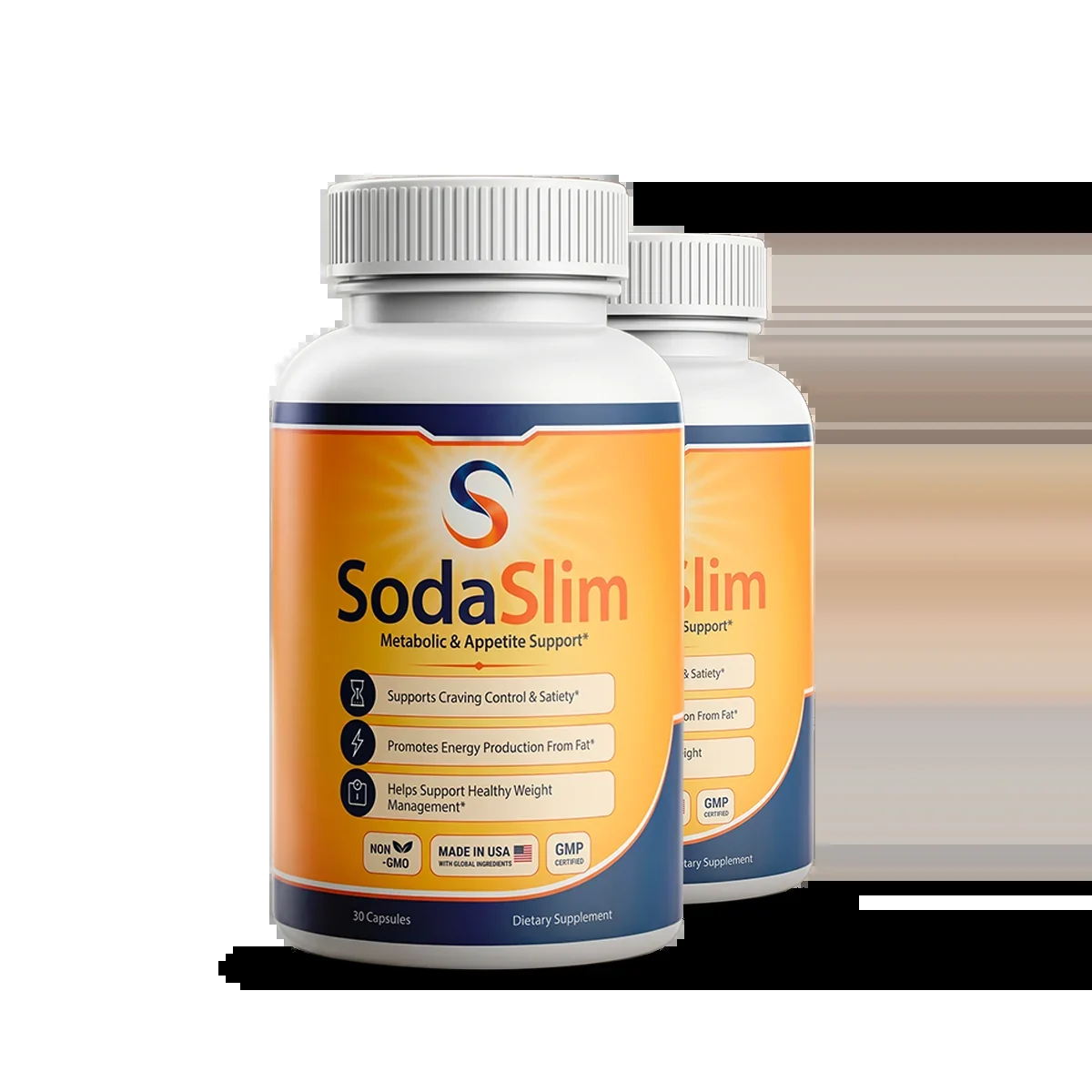
Some actives genuinely belong in a capsule. SodaSlim is a once-daily metabolic and appetite formula built on concentrated botanical extracts, with every amount printed on the panel.
See the Official Store OfferComparison 3: everything else in the tub
Flavoured powders carry passengers, and some of them work against the reason you bought the product. Sugar alcohols — sorbitol, xylitol, maltitol and their relatives — are common in flavoured tubs and are a documented cause of gas and loose stools in sensitive people at ordinary intakes. Adding them to a fermentable prebiotic fibre stacks two gas-producing mechanisms in one scoop.
The other passengers to check are added sugars, protein or greens blends that inflate the scoop without adding fibre, and stimulants in anything sold as a combined digestion-and-energy product. It is also worth reading the "Other Ingredients" line for thickeners and gums, which are harmless for most people but are additional fermentable material for anyone who is sensitive. A short passenger list is not automatically a better product, but it does make the product easier to judge, and easier to blame correctly if it disagrees with you.
Comparison 4: what a gut health supplement powder costs per serving
Compare cost per serving at the dose you will actually take — not per tub, and not per scoop if the serving is two scoops. A large tub at a two-scoop serving can work out more expensive per day than a smaller one at a single scoop, and the front-of-pack "60 servings" claim is doing a lot of quiet work in that calculation. Convert everything to a per-day basis before comparing anything.
The honest comparison, though, is against food, and food generally wins on cost. Beans, oats, whole fruit with the skin on, and vegetables deliver fibre bundled with everything else in the plant — the polyphenols, the water, the micronutrients — and no isolated fibre reproduces that package. Someone searching for the best fiber supplement for gut health and weight loss is usually better served by adding a fibre-dense food to two meals a day than by any tub, and a powder makes most sense as a supplement to that, not a substitute for it.
Tolerance: the ramp-up nobody prints on the front
Most bad experiences with fibre powders are dosing errors rather than product faults. Going from a low-fibre diet to a full scoop overnight predictably produces gas, cramping and bloating, and people usually conclude the product is wrong for them when the schedule was the problem. Starting at roughly a quarter of the recommended serving and building over two to three weeks avoids most of that, and gives the gut community time to adjust.
Water matters just as much, particularly with viscous fibres. Psyllium works by forming a gel, and forming that gel without adequate fluid can make constipation worse rather than better. Drink a full glass with the dose and keep fluid up across the day. Anyone with a diagnosed digestive condition, a history of bowel obstruction or difficulty swallowing should speak to a doctor before starting a bulking fibre at all — that is a genuine medical caution and not a formality.
What a fibre powder cannot do
Plainly: a fibre powder is not a treatment for any digestive condition, and nothing sold as a dietary supplement may be presented as one. What the evidence supports is narrower and more mundane — better stool consistency and regularity for many people, a contribution toward a fibre intake most adults are short of, and, with fermentable fibres, a plausible but still developing case for shifts in the gut community.
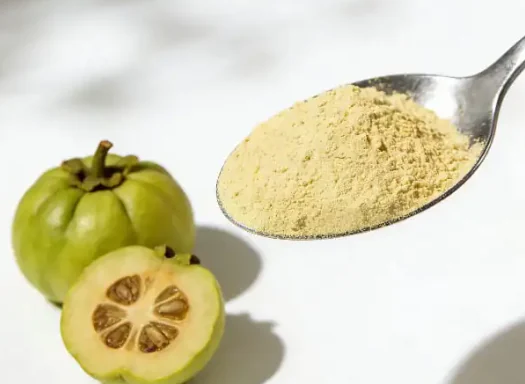
Two limits deserve emphasis. First, results are individual: the microbiome differs enormously from person to person, and identical products produce different experiences in different people for reasons the science cannot yet predict. Second, fibre supplements are frequently marketed with weight-management language that outruns their evidence. Viscous fibre can increase fullness, and that is a real if modest effect, but a scoop of powder is not a weight-loss mechanism on its own and no calorie-related benefit appears without a diet doing the actual work. Where a product connects to weight management, that connection deserves to be argued rather than implied — the same standard we apply to the evidence behind green tea, green coffee and garcinia.
Frequently asked questions
What is the best type of fibre in a gut health powder?
There is no single best type, because the three functional groups do different jobs. Psyllium husk has the most established evidence for stool bulk and regularity and ferments relatively little, which makes it the gentler starting point. Inulin and FOS are more strongly prebiotic but ferment vigorously and cause gas in many people. Match the fibre to what you want and to how sensitive you are.
How many grams of fibre should a supplement serving contain?
Enough to matter against a daily target set in the mid-to-high twenties of grams for most adults, which in practice means a serving measured in whole grams rather than milligrams. Anything supplying a fraction of a gram is not a meaningful contribution. Check how many scoops the panel counts as one serving before you compare two products.
Why does fibre powder make me bloated?
Usually because fermentable fibre is doing exactly what it is meant to do. Gut bacteria ferment prebiotic fibres such as inulin and FOS, and fermentation produces gas. Sugar alcohols in flavoured powders add a second gas-producing mechanism on top. Starting at a quarter serving and building up over two to three weeks, with plenty of water, prevents most of it.
Can I get the same benefit from food instead of a powder?
For most people, yes, and food comes out ahead on cost as well. Beans, oats, whole fruit eaten with the skin, and vegetables deliver fibre alongside water, polyphenols and micronutrients that no isolated fibre reproduces. A powder is a reasonable way to close a persistent gap when food alone is not getting you there, but it works best as an addition rather than a replacement.
Medical note: this article is general information, not medical advice. Speak to a healthcare professional before starting any supplement, especially if you are pregnant, nursing, sensitive to caffeine, or taking medication.
Scientific references
- Harvard T.H. Chan School of Public Health, The Nutrition Source — Fiber
- Mayo Clinic — Dietary fiber: Essential for a healthy diet
- NIH NIDDK — Eating, Diet and Nutrition for Constipation
- Reynolds A. et al. — Carbohydrate quality and human health, The Lancet (2019) — pooled analyses of dietary fibre intake
- NIH NCCIH — Probiotics and Prebiotics: What You Need To Know
If a capsule suits your routine better
Not every active needs a scoop. If you are weighing up where to buy a once-daily capsule instead, SodaSlim lists each botanical and its amount on the panel, with the current official-store offer, free US shipping and a 60-day money-back window.
Check the Official Store Offer