What to Look For in the Best Gut Health Supplement for Women
Quick Answer: What Should Women Look For in a Gut Formula?
Judge it on the panel, not the audience it was designed for. Most formulas marketed to women differ from the general version in packaging, added botanicals and marketing language rather than in the ingredients doing the work, so the same checks apply: named actives with stated amounts, strain-level naming for any live cultures, and a fibre dose measured in grams. Where a women's formula does differ meaningfully, it is usually because something has been added — caffeine-bearing botanicals, iron, or hormone-adjacent herbs — and each of those deserves a deliberate decision rather than a surprise.
- Check the additions: botanicals added for "hormonal balance" or "energy" are the real difference in most of these formulas.
- Check for caffeine: "gut and energy" blends frequently contain green tea or green coffee extract, both of which carry it naturally.
- Check the cautions: if pregnant, nursing or trying to conceive, added botanicals and iron are conversations for a doctor, not the pack.
What actually differs in a formula marketed to women
The microbiome does differ between men and women on average, and hormonal cycles do interact with digestion in ways that are genuinely under study. Neither fact establishes that a given product on the shelf has been formulated around either finding. In practice, a large share of women's gut formulas are the general formula in different packaging, sometimes with a few botanicals bolted on and a redrawn front label. That is not a scandal, but it does mean the burden of proof sits with the product.
The way to settle it takes about a minute. Find the general version of the same brand's formula and compare panels line by line. If the actives and amounts match, you are looking at a marketing variant and should choose on the same grounds you would use for any product: disclosure, dose and evidence. If the panels differ, the differences are the entire story, and the next four sections are about how to judge them.
The added-botanicals problem
Additions are where women's formulas earn their premium and where most of the risk sits. Herbs positioned for hormonal balance, cycle support or menopausal comfort are common, and the evidence behind them ranges from moderate for a small number of well-studied ones to essentially nothing for the rest. More to the point, botanicals that act on hormonal pathways are not neutral bystanders: they can interact with medication, including hormonal contraception, and "natural" carries no implication of "inert".
A second issue is dose dilution. Adding six botanicals to a formula without expanding the capsule means every ingredient gets a smaller share, and a long list frequently signals a shorter individual amount. Someone searching for the best gut health supplement for women will find plenty of packs with impressive-looking ingredient lists, and the length of that list is often inversely related to whether any single ingredient is present at an amount used in research. A short list at defensible amounts beats a long list of dustings, every time.

Caffeine hides in "gut and energy" blends
Any formula selling digestive support and daily energy in the same breath deserves a caffeine check. Green tea extract and green coffee bean extract both carry naturally occurring caffeine, and neither is always flagged prominently on the front of a pack. Guarana and yerba mate do the same. If your day already includes coffee, tea and a fizzy drink, a supplement adding more is a stacking decision, and health agencies generally place a moderate daily ceiling on caffeine for healthy adults — lower during pregnancy, where the advice is more conservative still.
This is not an argument against caffeine, which is one of the better-evidenced compounds in the supplement world. It is an argument for knowing it is there. Caffeine also has a real effect on gut motility for many people, which means a "digestive" product containing it can produce changes that get attributed to the botanical blend when the stimulant is doing the work.
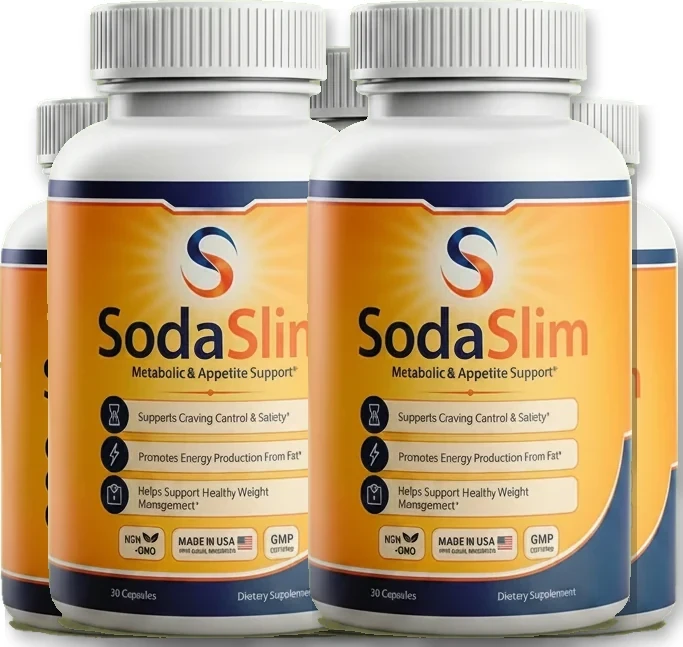
A formula that states its caffeine sources
SodaSlim is an appetite and metabolic capsule, not a digestive one — and it names its caffeine-bearing botanicals on the panel rather than leaving you to work them out.
See the Official Store OfferIron, folate and the pregnancy question
Iron is one of the few genuinely sex-linked additions in this category, since requirements are higher for menstruating women and iron deficiency is more common. It is also the addition that most deserves caution. Iron commonly causes constipation, nausea and stomach discomfort — exactly the symptoms a gut formula is bought to settle — and unlike most nutrients, excess iron accumulates rather than being excreted, which is why supplementation is normally something to establish a need for rather than take speculatively. A blood test answers the question; a pack cannot.
Pregnancy changes the calculation for every part of the label. Prenatal nutrition is a medical conversation, added botanicals frequently carry pregnancy cautions, and caffeine guidance is tighter. The correct approach here is not to read harder but to hand the label to a doctor or midwife and ask. That is the honest answer even though it is not the one a supplement page is usually expected to give.
| Claim on the pack | What the evidence supports | What to check on the panel |
|---|---|---|
| "Debloat" or "flat tummy" | Poorly defined; bloating has many causes and few respond to one ingredient | Whether fermentable fibre or sugar alcohols are present — both can cause it |
| "Hormonal balance" | Ranges from moderate for a few studied botanicals to none for most | Which herb, at what amount, and whether it interacts with medication |
| "Clean energy" | Caffeine works; the claim is usually about the source, not a new mechanism | Green tea, green coffee, guarana or yerba mate on the ingredient list |
| "Supports the microbiome" | Strain-specific and still developing; not a general property of the category | Full genus, species and strain names with per-strain counts |
| "Formulated for women" | Not a regulated term and not a claim about content | Compare the panel against the brand's general version |
A formula aimed at a specific audience still has to answer the same questions as any other: what is in it, how much, and what has actually been shown.
Bloating claims and what they leave out
Bloating is the most-marketed symptom in this category and one of the least specific. It can come from swallowed air, from constipation, from fermentation of perfectly healthy foods, from hormonal fluctuation across the cycle, from an underlying condition, or from the supplement itself. A product promising to end it is promising to fix something with many causes using one mechanism, which is the shape of a claim that outruns its evidence.
There is also a self-inflicted version of the problem. Prebiotic fibres are fermented by gut bacteria, and fermentation produces gas; sugar alcohols in flavoured powders and gummies do the same by a different route. A formula sold specifically for bloating can contain both. If a product makes you gassier, the ingredient list usually explains why, and the fix is often a slower ramp-up rather than a different product. Persistent bloating that is new, painful, or accompanied by weight change belongs with a doctor rather than a supplement shelf.
Menopause, midlife and where marketing outruns the evidence
Formulas aimed at midlife and menopause are the fastest-growing corner of this category, and the gap between the confidence of the copy and the state of the research is at its widest here. Metabolism, body composition and digestion do change with the menopausal transition, and interest in how the gut community interacts with those changes is legitimate and active. What does not follow is that a capsule blend has been shown to influence any of it.
Read these packs the same way as any other: which ingredients, at what amounts, with what published support for that ingredient at that amount. Then note that hormonal symptoms have well-studied medical options that a supplement is not competing with, and that anyone taking hormone therapy or other prescription medication should check interactions before adding botanicals. Where a product connects itself to weight management as well, the same standard applies — we walk through that in our look at the evidence behind green tea, green coffee and garcinia, and our breakdown of the SodaSlim formula applies it to a specific capsule.
What the best gut health supplement for women cannot do
Being straight about the limits. No supplement in this category may be sold as a treatment for any condition, and none of them should be expected to resolve a symptom that has a medical cause. The gut community varies enormously between individuals, most published work is short and conducted in selected participants, and "formulated for women" is a marketing description rather than a regulated claim about content or testing.
What is reasonable to expect is smaller and duller. A well-chosen fibre can help with regularity. A well-characterised strain at a studied amount is a sensible thing to try for several weeks. Neither substitutes for the things with the strongest evidence behind them: a varied diet with plenty of plants, adequate fluid, sleep and movement. If a pack is positioned as an alternative to those rather than an addition, that positioning is the clearest signal on the label.
Frequently asked questions
Do women need a different gut health supplement than men?
Not usually, in terms of the ingredients doing the work. Fibre and live cultures behave the same way regardless of who takes them, and many formulas marketed to women are the general formula in different packaging. The genuine differences, where they exist, are additions such as iron or hormone-adjacent botanicals. Compare the panel against the brand's general version and the answer becomes obvious quickly.
Should a gut supplement for women contain iron?
Only if you have a reason to take iron. Requirements are higher for menstruating women and deficiency is more common, but iron commonly causes constipation and stomach discomfort, and excess accumulates rather than being cleared. That makes it something to establish a need for with a blood test and a doctor, rather than something to take speculatively because it appeared in a blend.
Are gut supplements safe during pregnancy?
That is a question for a doctor or midwife, not a label. Pregnancy changes the guidance on caffeine, many added botanicals carry pregnancy cautions, and prenatal nutrition is managed medically. Take the actual pack to your appointment and ask about the specific ingredients rather than relying on general reassurance printed on the front.
Will a gut supplement help with bloating?
Sometimes, and sometimes it causes it. Bloating has many causes, from constipation and swallowed air to normal fermentation of healthy foods and hormonal fluctuation, so no single ingredient addresses all of them. Prebiotic fibres and sugar alcohols both produce gas by design. Starting at a low dose and building up over two to three weeks helps, and new or painful bloating should be checked by a doctor.
Medical note: this article is general information, not medical advice. Speak to a healthcare professional before starting any supplement, especially if you are pregnant, nursing, sensitive to caffeine, or taking medication.
Scientific references
- NIH Office of Dietary Supplements — Iron: Fact Sheet for Consumers
- NIH NCCIH — Probiotics: What You Need To Know
- Harvard T.H. Chan School of Public Health, The Nutrition Source — The Microbiome
- Mayo Clinic — Caffeine: How much is too much?
- NIH LiverTox — Herbal and Dietary Supplements (hepatotoxicity records)
Judging a capsule on its panel
If you are comparing the best gut health supplement brands and want to see the same standard applied to a metabolic and appetite formula, SodaSlim names every botanical and its amount — and the official store carries the current offer with a 60-day money-back window.
Check the Official Store Offer